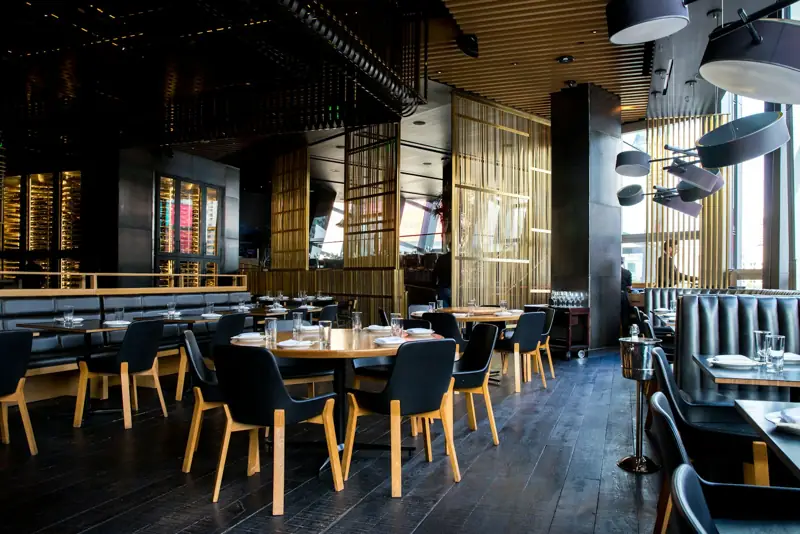
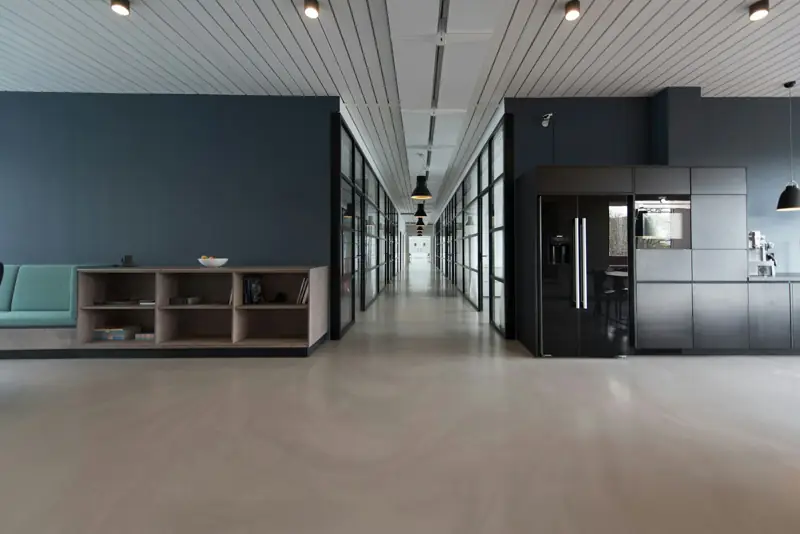
A commercial fit out contractor in Dubai turns an empty or old unit into a working office, shop or restaurant: partitions, ceilings, services, joinery and finishes, plus the landlord and authority paperwork. Before you sign, check five registrations, because “approved contractor” means something different to each authority. Then read the contract for price basis, retention, defects period and insurance, because that is what protects you if the job goes wrong.
In short:
- Dubai Law No. 7 of 2025 requires contractors to hold a trade licence and a register entry, and it limits subcontracting without approval.
- Lump sum is the usual price basis in the UAE, and it is separate from the delivery route (traditional, design and build, or turnkey).
- Retention of 5 to 10% and a 12-month defects period are common norms, but neither applies unless your contract says so.
- Contracts signed since 1 June 2026 fall under a new UAE Civil Code with new article numbers and new rights for the client.
What does a commercial contractor do?
A commercial contractor manages and builds works for business premises. In Dubai that covers office towers, retail units, restaurants, clinics and showrooms, usually inside a building that already exists. This differs from a main building contractor, who builds the structure. On a typical fit out they will:
- review the landlord’s fit-out manual and survey the unit;
- prepare or follow drawings, and price them in a bill of quantities;
- handle or support the landlord NOC, authority permit, Civil Defence and DEWA steps;
- coordinate trades: demolition, partitions, MEP, ceilings, floors, joinery, glazing and AV;
- manage site safety, deliveries, working hours and inspections;
- hand over with as-built drawings, test certificates and a snag list closed.
For an office, a commercial office contractor also lives with tower rules: service lift slots, out-of-hours noisy work and a landlord’s approved list for critical systems. Our office fitout process guide sets out the sequence, and retail shop contractor covers shops.
What “approved contractor” means: five checks
There is no single approval. Each body has its own status, so check them in this order.
| Check | What it means | Where to verify |
|---|---|---|
| 1. Trade licence | Valid licence with a matching activity. Dubai Municipality’s list treats Interior Decoration and Decoration Design & Implementation as secondary activities, supplementing main activities | Invest in Dubai for mainland. The free zone for free-zone licences. DM activity list |
| 2. Municipality or zone register | DM’s Consultants and Contractors Register, or DDA registration in DDA zones (AED 250, valid 1 year) | DM data page, DDA registration |
| 3. DEWA enrolment | Fit-out electrical connections go through enrolled firms, graded Platinum to Bronze | Ask for the enrolment of the electrical subcontractor |
| 4. Civil Defence | Fire protection and alarm work needs a DCD-approved company | Ask for the fire subcontractor’s approval |
| 5. Landlord’s list | Some towers and malls require listed contractors, at least for critical systems | The fit-out manual or the landlord’s team |
Also ask about Law No. 7 of 2025: contractors must work within their classification and may not subcontract without approval, and existing firms were given until about January 2027 to comply. Whether a firm whose licence shows only a secondary activity may take a full fit out alone is not something we found stated, so ask them directly and ask how they will cover structural or MEP work. For general questions on warranty and programme, see how to choose a fit out contractor.
Price basis and delivery route are two separate decisions
Many quotes mix these up. Price basis is how you pay, and delivery route is who designs and who builds.
| Option | What it means | Best when | Watch out for |
|---|---|---|---|
| Lump sum (price basis) | Fixed price for defined work | Drawings are complete | Weak drawings lead to variations |
| Re-measure (price basis) | Agreed rates, final quantities measured | Quantities are uncertain, such as old buildings | The final cost moves |
| Cost-plus (price basis) | Actual cost plus a fee | Fast or evolving work | You carry cost risk, so audit it |
| Traditional (route) | Consultant designs, then contractors bid | You want independent design and competitive bids | More handovers, longer start |
| Design and build (route) | One firm designs and builds | Most offices and shops, tight timing | Fix the specification, or quality can drift |
| Turnkey (route) | Design, procurement, construction and commissioning to a ready space | You want one point of responsibility | Read what “everything” excludes: see turnkey fit out |
Law firms describe lump sum as the most common form, with design and build increasingly common. Under the new Civil Code, higher input costs alone generally do not reprice a lump-sum contract, and a contractor claiming hardship must prove general exceptional circumstances that could not have been foreseen, according to Galadari.
Contract terms to read before you sign
| Term | Common norm | Why it matters |
|---|---|---|
| Advance payment | No legal cap. One contractor’s budget guide gives 10 to 20% at signing, and payment plans vary | It is your largest exposure, so tie it to a scope |
| Retention | About 10% is common, half released at completion and half after the defects period. Not legally mandated | It gives you leverage to get defects fixed |
| Performance bond | A 10% on-demand bond is typical on larger construction contracts | Rare on small fit outs, so decide if the job justifies the cost |
| Defects period | 12 months from handover under most contracts | It must be written in. It is your main protection on finishes |
| Delay damages | Agreed per day or per week, often capped | A court can reduce them if excessive |
| Variations | Written instruction and agreed price before work | The most common source of disputes |
| Insurance | Contractors’ all risk, third party, workmen’s compensation | One DIFC tower manual asks for at least AED 3 million third party |
What changed under the new Civil Code
A new UAE Civil Code, Federal Decree-Law 25 of 2025, replaced the 1985 Code on 1 June 2026, and contracting rules moved to Articles 812 to 839. Many guides still quote the old Article 880. Commentary from Mayer Brown and Galadari points to these changes:
- Delay and defects (Art. 818): after notice and a reasonable remedy period, the owner may rescind or have the work corrected at the contractor’s expense, after establishing the facts, without first needing court permission.
- Duty to warn (Art. 816): a contractor must immediately notify the owner of anything that would hinder proper execution, or bear the consequences.
- Withdrawal (Art. 836): the owner may withdraw before completion, paying expenses, work done and lost profit, which a court may reduce.
- Decennial liability (Arts. 821 to 824): ten-year joint liability for collapse and defects threatening stability or safety, which cannot be excluded.
Decennial liability will not cover most office finishes. Law firm commentary places plumbing, electrical and finishing defects outside it unless they affect stability or safety. So your contract and defects period do the real work. Article numbers come from legal commentary, so ask your lawyer to confirm them against the official text, and note that older contracts may stay under the old Code.
How to compare commercial fit out bids
- Issue the same drawings and scope to each bidder. If you have no drawings, you are comparing guesses.
- Ask for a BOQ with quantities, rates, brands and exclusions, not a single figure.
- Line up the exclusions: furniture, IT, AV, authority fees, landlord fees and deposit often sit outside the price.
- Check the programme against the tower’s working hours.
- Ask for two recent, similar projects you can visit or call about.
- Name the site manager and ask how often they are on your site.
VAT at 5% applies to the works. Registered businesses making taxable supplies can usually recover it, but check with your accountant.
Frequently asked questions
What does a commercial contractor do?
A commercial contractor builds and manages works for business premises: partitions, MEP, ceilings, floors, joinery and finishes, plus trades, safety, permits and inspections. Fit out contractors work inside existing buildings rather than building the structure.
How do I check a fit out contractor’s licence in Dubai?
Search the Invest in Dubai licence page by name or number and read the status and activities. Then ask for proof of the DM or DDA registration, DEWA enrolment and Civil Defence approval of the relevant subcontractors, and the landlord’s acceptance.
What is the defects liability period for a fit out in Dubai?
Twelve months from handover is the common norm, and the law does not automatically give you one, so it has to be written into the contract. Some landlords’ manuals also set 365 days.
How much retention should I hold on a fit out?
Retention of 5 to 10% is common in UAE construction, often half released at completion and half after the defects period. It is not required by law, so agree it in the contract.
Is a fit out covered by decennial liability in the UAE?
Mostly no, for ordinary finishes. Legal commentary places plumbing, electrical and finishing defects outside it unless they affect stability or safety. Works that touch structure or life safety are different, so take legal advice on your own project.
Should I use one contractor for design and build?
For most offices and shops it is the simplest route, because one party answers for design and construction. If you want independent checks or competitive tenders on a larger job, compare it with a consultant-led route.
Checked in November 2026. This is general information, not legal or tax advice. Take advice from a Dubai lawyer before signing or ending a contract.
Need a commercial fit out contractor in Dubai?
M&A is led by an architect and uses its own team on site. We give one quotation with a full BOQ after a free site visit. See commercial fit out and office fit out, or book a visit.